
Speaking of technology , we can say AR is blurring the lines of reality . Allowing people to get into an immersive envrionment that ignites multiple human senses and recieve an unprecendeted level on engagement.
A really mindblowing example of AR technology is used by the US Army that according to http://www.Adobe.com , is giving soldiers “improved situational awareness with the use of AR technology. The tech, called “Tactical Augmented Reality” (TAR), is essentially an eyepiece that helps soldiers precisely locate their positions as well as the locations of others—both friend and foe. “
“TAR will one day replace night-vision goggles, as it enables soldiers to see in the dark. It will also replace the handheld GPS system that soldiers carry today to approximate their positions. The eyepiece is connected wirelessly to a tablet that soldiers wear on their waists, plus it’s wirelessly connected to a thermal site mounted on their rifles or carbines. Here’s the cool part: If a soldier is pointing his or her weapon, the image of the target, plus other details ,such as the distance to target, can be seen through the eyepiece”
Another example is Disney who back in 2015 , developed a technology that makes colouring book characters 3D as they are being coloured. This is a really simple application that actually brings a completly new level of engagement for small children.
A number of artists are combining technology with creativity to create amazing things making the world a bit more interesting.
These illustrators, designers, and digital sculptors believe that augmented reality (AR) has the potential to unlock new forms of storytelling and self-expression. It’s a bold bet, and the artists I spoke to aren’t waiting around to see if the future they imagine will come true — they’re creating it.
We know that AR will be transformative . We’ve seen it from the iOS Measure app to Pokémon GO. But one largely unexplored application of AR, and probably unknown for a lot of people is augmented reality art.
Heather Cathleen Dunaway Smith
http://www.clockworkbird.com/pages/index.html
“The only way for this medium to discover itself is by lots and lots of artists creating work,” says Heather Cathleen Dunaway Smith. “I’m really excited to see new, easy-to-use software emerging. This sort of art-making should be accessible to everyone.”
She studied interactive multimedia because she wanted to tell stories in a unique way and that created a dialog between art and audience, rather than a monologue. “Responsive artwork fosters real relationships with audience members and opens them up to deeper emotional connections,” she says. “For me, art is about those connections.”
“Today, Heather’s artwork pushes the boundaries of AR, adding interactive elements and immersive experiences. But planning still begins on paper. Plans become digital sketches, and sketches inspire 3D assets created in Blender. These assets are imported in Adobe Aero, Artivive, or Unity to add interaction to a scene.”
“AR is especially good at allowing people to try on different perspectives and realities. The illusion of proximity makes the work really impactful. Experiences that seem to happen in your immediate physical space automatically feel personal and emotionally potent. If the piece is truly responding to the audience, it will give them a sense of agency and ownership over the work. The line between art and audience is blurred, leading to a deeper emotional connection.”
A really cool example of her work would be this AR hug made for the Pandemic :
http://www.clockworkbird.com/pages/page.htmlor this weird head on her instagram :
Andrew Wilson
“Andrew Wilson began experimenting with traditional ink-on-paper calligraphy six years ago. Instagram led him to digital lettering with Procreate on an iPad Pro. Once he started, there was no turning back.”
“Digital lettering allowed Andrew to incorporate animation into his work with RoughAnimator and Procreate’s animation tools. AR opened a whole new world.”
“I enjoy creating lettering that has a tangible quality; something that creates the illusion of depth using light and shadow. Around a year ago I started seeing people experimenting with augmented reality using Slide AR, an uncomplicated app that allows you to arrange PNGs and GIFs in a 3D space. For me, this seemed like a great way to expand on the 3D elements I had already been trying to bring to my work.”
Nadine Kolodziey
“VR is a very singular experience focused on the individual wearing the glasses,” says Nadine Kolodziey, a visual artist and illustrator based in Berlin. “With AR, the community can be included and it adds to the way we communicate. During my design process I think a lot about the people ‘using’ the art. We switch from the viewer or visitor to the user and this makes a huge difference.”
“The magic of something unpredictable and new makes AR so playful. It’s just building up its character, rules and catalogue. For me as a creative, it’s a great time to explore and follow the developments of this young media.”
Darren Booth
After freelancing for almost 20 years, illustrator Darren Booth got bored of traditional materials and decided to buy an iPad. “It opened up a whole new world and completely re-energized me,” Darren said . “Experimenting with a new set of tools and variety of apps organically led me to AR. I realized quickly that AR has the potential to change how art and illustration can be used.”
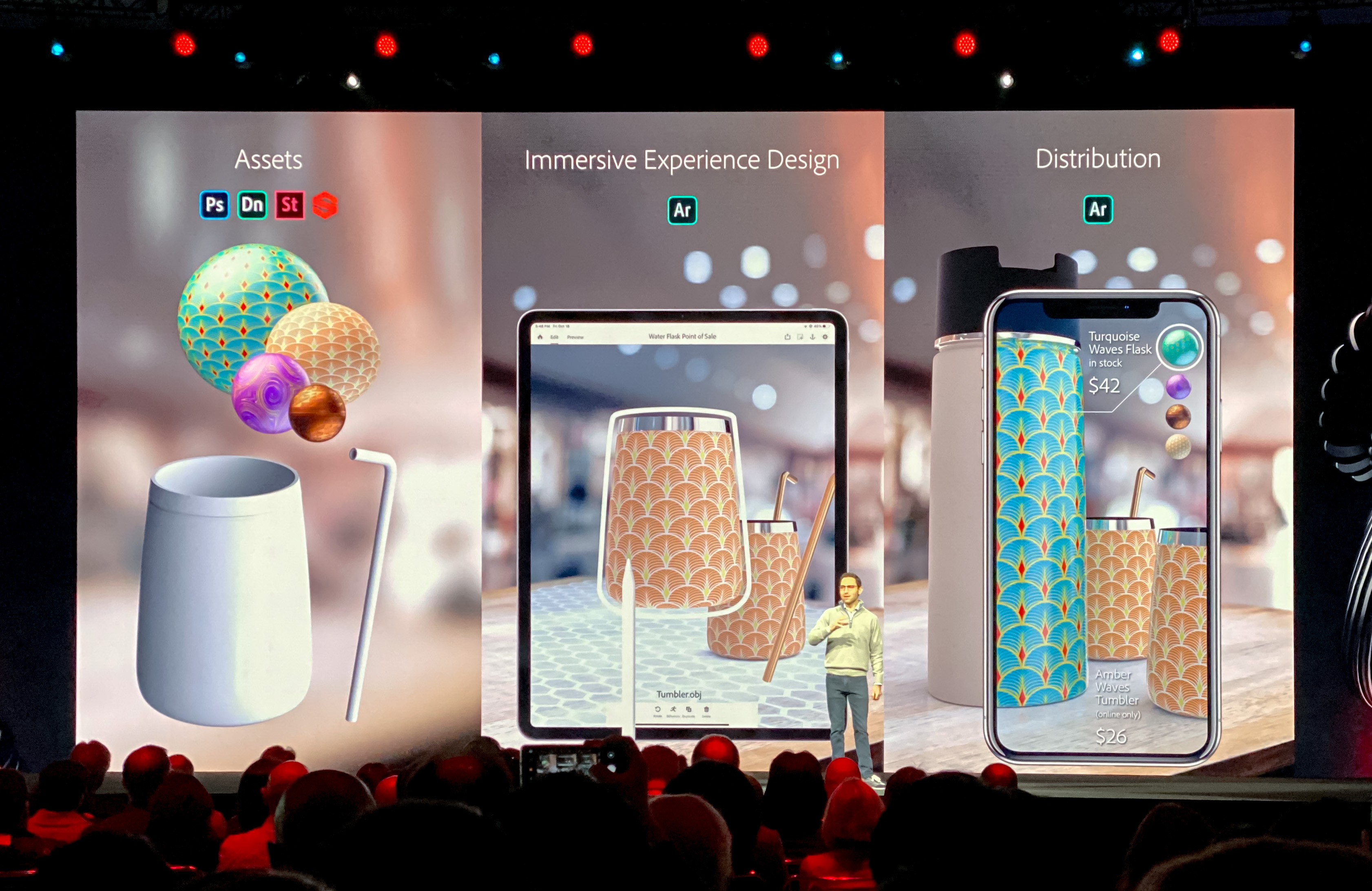
Darren completed a 12-week residency with Adobe, experimenting with Adobe Aero. Aero is one of the forefront apps designed to make designing for AR more approachable. Artists can easily import their existing Photoshop documents and artwork to a 3D world. He compares the state of AR today to early blues music, the first television sets, and the iPhone 3G: game-changers with rough edges and an incredible amount of potential.
“I’m comfortable working in 2D, and when I come up with an idea that I want to execute, I have a decent idea about the various paths I could take to achieve that goal. But with AR, those paths aren’t clear yet. It’s very exciting to have discovery phases again, especially when failure occurs. I’m so curious about how to create something I haven’t created before.”
 Darray Tattoos
Leave a comment